
Christmas lights running costs: $30.51 a season for old C9 bulbs, $3.49 for LED
At the latest EIA electricity price, 100 incandescent C9 bulbs cost $30.51 to run for a season. LED versions cost $3.49. Mini lights are a different story: switching saves just $1.36 per string.
50% of our commission goes to the charity or club you pick.Change
Pick a charity and we'll give them 50% of our commission.
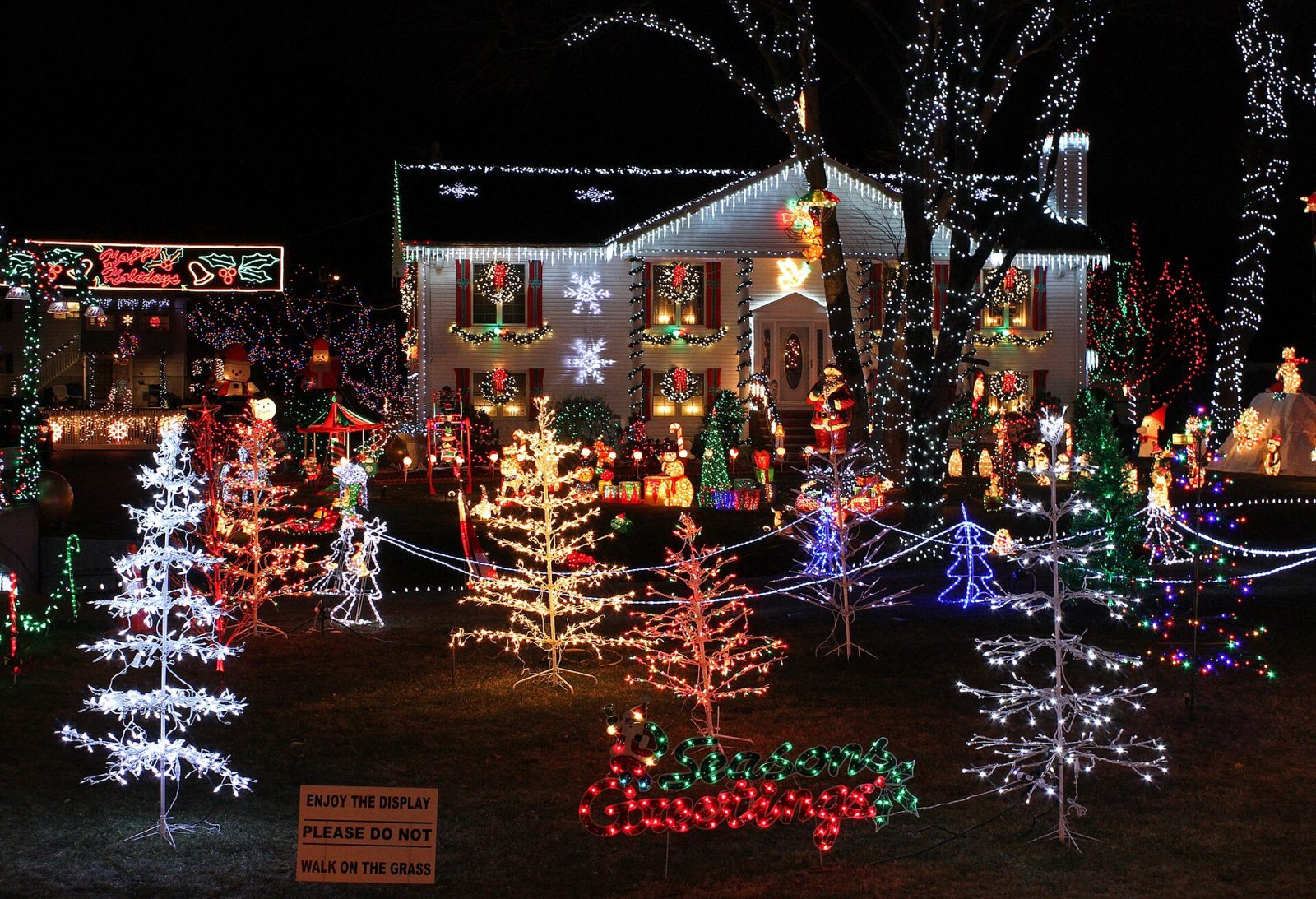
A roofline of 100 old-style incandescent C9 bulbs costs about $30.51 to run for a holiday season at today's average U.S. electricity price. The same 100 bulbs in LED cost about $3.49. That's a saving of $27.02 a year, enough to pay back new LED bulbs in under five seasons.
For indoor mini lights, the sums are much smaller. A 100-light incandescent string costs $1.78 a season, and an LED one $0.42. So whether to switch depends on what kind of lights you have. Here's the math, with every step shown.
How we worked it out
We used the U.S. Energy Information Administration's (EIA) latest average residential electricity price, 18.16 cents per kilowatt-hour (kWh) in August 2026. We assumed the lights are on 6 hours a night for 40 nights, roughly from the day after Thanksgiving to early January. That's 240 hours.
The formula is: watts × hours ÷ 1,000 = kWh, then kWh × price = cost. Wattages and prices are from the sellers' own product pages, checked on November 8, 2026. Your own rate is on your electric bill, so swap it in for a closer figure.
At a glance
| Lights | Watts | kWh a season | Cost a season | Price to buy |
|---|---|---|---|---|
| 100 incandescent mini lights | 40.8 | 9.79 | $1.78 | $19.99 |
| 100 LED mini lights (two 50-light T5 sets) | 9.6 | 2.30 | $0.42 | $37.98 |
| 100 incandescent C9 bulbs | 700 | 168 | $30.51 | Not listed |
| 100 LED C9 bulbs (four boxes of 25) | 80 | 19.2 | $3.49 | $119.96 |
Costs use 18.16 cents per kWh, 6 hours a night for 40 nights.
Mini lights: LED saves about $1.36 a string
Christmas Lights, Etc. lists its 100-light clear incandescent mini string (6-inch spacing, 50.5 feet) at 40.8 watts, or 0.408 watts per bulb, for $19.99. Over 240 hours that's 40.8 × 240 ÷ 1,000 = 9.79 kWh, which costs $1.78.
Its T5 warm white LED set has 50 lights over 25.5 feet and uses 4.8 watts in total, for $18.99. Two sets give you 100 lights over about the same length, at 9.6 watts and $37.98. That's 2.30 kWh a season, or $0.42.
So LED saves about $1.36 a string each season, but costs $17.99 more up front. It would take about 13 seasons to earn that back on electricity alone. If your incandescent minis still work, there's no rush to replace them.
C9 bulbs: LED saves $27 a season
The big, old-fashioned C9 bulbs used on rooflines are where the money is. 1000Bulbs.com lists clear incandescent C9 bulbs at 7 watts each, in boxes of 25. A run of 100 uses 700 watts. Over 240 hours that's 168 kWh, or $30.51 a season.
Christmas Lights, Etc. sells C9 OptiCore LED replacement bulbs at 0.8 watts each, $29.99 for a box of 25. A hundred bulbs use 80 watts, or 19.2 kWh a season, which costs $3.49. They're sold as C9 replacement bulbs, so you can keep your existing C9 strings.
The saving is $30.51 − $3.49 = $27.02 a season. Four boxes of LED bulbs cost $119.96, so they pay for themselves in about 4.4 seasons.
Worked example: a whole-house display
Say you put up 500 mini lights on the tree and in the windows, and 100 C9 bulbs along the roof.
- All incandescent: 204 watts of minis plus 700 watts of C9s = 904 watts. That's 216.96 kWh a season, or $39.40.
- All LED: 48 watts of minis plus 80 watts of C9s = 128 watts. That's 30.72 kWh a season, or $5.58.
That's a difference of $33.82 a season, and almost all of it comes from the roofline.
Where you live changes the bill
The EIA's August 2026 figures show big gaps between states. Here's the same 100 C9 bulbs for a season in three of them:
- Hawaii, 47.18 cents per kWh: $79.26 incandescent, $9.06 LED.
- California, 29.75 cents: $49.98 incandescent, $5.71 LED.
- Louisiana, 12.87 cents: $21.62 incandescent, $2.47 LED.
In Hawaii, switching a 100-bulb roofline to LED pays back in under two seasons.
Other things to weigh
How many strings you can connect. The incandescent mini string allows up to 5 sets end to end. The LED T5 sets allow up to 45, so you need fewer outlets and extension cords.
How long they last. The incandescent minis and C9s are rated for about 3,000 hours. The LED minis are rated for 100,000 hours and the LED C9s for 60,000. At 240 hours a season, even incandescent bulbs last about 12 seasons if they don't break first.
Smart lights. If you want color effects and app control, Govee sells app-controlled Christmas Sparkle string lights at $99.99 for 66 feet (250 LEDs) or $109.99 for 99 feet (375 LEDs) on its own site. Govee's page doesn't list the wattage, so we couldn't work out a running cost for them.
Where the others have the edge
- Incandescent minis cost half as much up front ($19.99 against $37.98 per 100 lights), and the running cost gap is only $1.36 a season. If you're buying for one season, they're cheaper.
- Incandescent C9s give the classic warm look some people prefer, and if your bulbs still work, you avoid a $119.96 outlay this year.
- Smart LED lights cost more than plain LEDs, but schedules and effects can replace a separate timer and several sets of lights.
Our verdict
Swap the big bulbs first. Replacing 100 incandescent C9s with LED saves about $27 a season at the average U.S. price, and pays back in about four and a half seasons, sooner in high-price states like Hawaii and California. For indoor mini lights, keep using what you have until it fails, then buy LED. Either way, a timer that keeps your lights to 6 hours a night matters as much as the bulbs.
FAQs
How do I work out my own lights' cost? Find the wattage on the box or label. Multiply watts by hours on, divide by 1,000, then multiply by the price per kWh on your bill. For example, 40.8 watts × 240 hours ÷ 1,000 × $0.1816 = $1.78.
Do LED Christmas lights cost much to run? No. A 100-light LED mini string costs about 42 cents for a whole season at 6 hours a night and the average U.S. price.
What about inflatables and projectors? They vary a lot. Check the wattage on the label or the product page, then use the same formula.
Which electricity price did you use? The EIA's U.S. average residential price for August 2026, 18.16 cents per kWh. The EIA marks 2026 figures as preliminary.
When you shop through Promo Magpie, part of the commission the shop pays us goes to the charity or club you pick. You pay the same price.
Sources: EIA, Electric Power Monthly Table 5.6.A, August 2026 data, checked November 8, 2026, Christmas Lights, Etc., 100 clear mini lights, Christmas Lights, Etc., T5 LED lights, Christmas Lights, Etc., C9 OptiCore LED bulbs, 1000Bulbs.com, 7-watt C9 bulbs, Govee, Christmas Sparkle string lights, all checked November 8, 2026
The Thursday email
Every Thursday: the best codes from the brands you shop at. After you sign up, pick your brands and whether you want codes, hot deals, free delivery or student offers. No spam, unsubscribe in one click.
Keep reading
TSA PreCheck vs Global Entry vs CLEAR+: from $16 a year to $219 before holiday flights
TSA PreCheck starts at $79.75 for five years, Global Entry is $120 and includes PreCheck, and CLEAR+ is $219 a year. Here's what each costs a family, and whether there's still time before Thanksgiving.
 Mike Dodd

Black Friday laptops 2026: why 16GB of memory and a 512GB SSD are the specs to check
The cheapest Black Friday laptops often cut corners on memory, storage and the screen. Here's what to look for, using Microsoft's, Apple's and Google's own requirements, with real spec sheets checked on November 8.
Mike Dodd
Thanksgiving meal baskets 2026: Walmart's $35 for 10 vs Aldi, Target and Amazon
Walmart's 2026 basket feeds 10 for $35, or $3.50 a person. We compare it item by item with Aldi, Target and Amazon, and look at what each one leaves out.
Mike Dodd