









































Debit card stolen? Report it within 2 business days and your loss stops at $50
Federal law caps what a thief can cost you on a debit card at $50, $500 or more, depending on how fast you report it. Here are the deadlines, and what your bank must do.

50% of our commission goes to the charity or club you pick.Change
Pick a charity and we'll give them 50% of our commission.
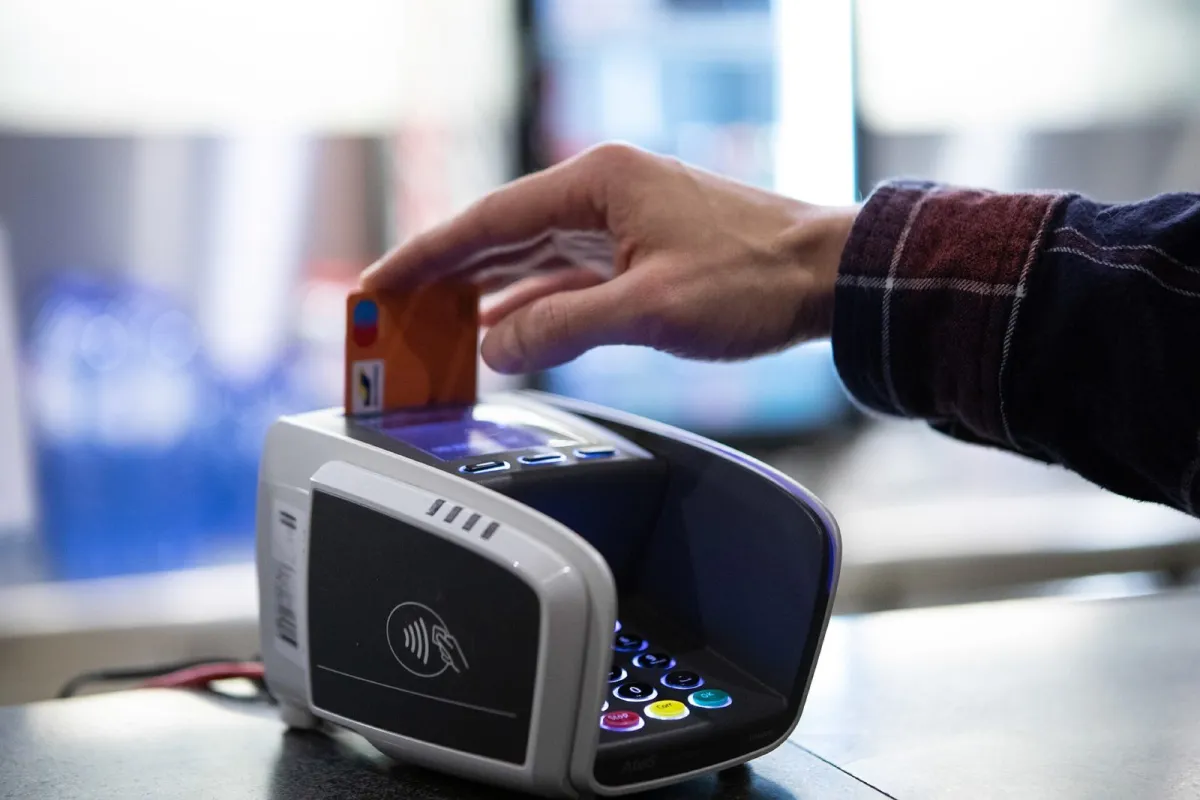
Lose your debit card while holiday shopping and report it within two business days, and the most you can lose to a thief is $50. Wait longer and it can be $500. Miss the 60-day window after your statement and there may be no limit at all. That's the Electronic Fund Transfer Act and the CFPB's Regulation E, and they're worth knowing before Black Friday on November 27.
The three tiers
Regulation E sets how much of an unauthorized debit card or ATM transaction you can be made to pay. The FTC's guide puts it simply:
| When you report a lost or stolen card | Most you can lose |
|---|---|
| Before any unauthorized charges | $0 |
| Within 2 business days of learning about it | $50 |
| Later, but within 60 days of your statement being sent | $500 |
| More than 60 days after your statement | Possibly everything taken after that point |
For the $500 tier, your bank has to show that the later charges wouldn't have happened if you'd reported in time.
The rule that matters most is the 60-day one. If an unauthorized charge shows up on a statement and you don't report it within 60 days of the bank sending that statement, you can be on the hook for charges after that point that timely notice would have stopped. If you were traveling or in hospital, the bank must extend the deadline to a reasonable period.
If your card wasn't lost
Often a skimmer or a fake store gets your card number, not the card. Regulation E's official commentary says the $50 and $500 tiers don't apply to transfers made without your card. What counts is reporting within 60 days of the statement that shows the charge. Report it in time and you shouldn't owe anything.
How the bank has to investigate
Under Regulation E, your bank must decide whether there was an error within 10 business days of your report. If it needs longer, it can take up to 45 days, but only if it puts the money back in your account provisionally within those 10 business days. For debit card purchases at a store or online (point-of-sale transactions), the 45 days becomes 90.
You can report in person, by phone or in writing. If you call, the bank can ask you to confirm in writing within 10 business days, and if you don't, it doesn't have to credit you provisionally while it investigates. It must tell you the result within 3 business days of finishing, and you can ask for the documents it relied on.
A worked example
Say your wallet goes missing on Black Friday and a thief spends $900 on your debit card. You notice that night and call your bank. Your maximum loss is $50.
Now say you don't notice until mid-December, and the thief has spent another $1,200 since. The $50 cap covers the first two business days. For the later spending, you can be liable up to a total of $500, if the bank shows timely notice would have stopped it.
On a credit card, the same theft would cost you at most $50, under the Truth in Lending Act's Regulation Z.
What to do now
- Turn on transaction alerts in your banking app so you see every debit card charge as it happens.
- If your card is lost or you spot a charge you don't recognize, report it at once by phone or the app, and note the date and time.
- Follow up in writing within 10 business days, with your account number and when you first reported it. Keep a copy.
- Read every statement through January, and report anything odd well within 60 days.
- If your bank hasn't credited you or finished its investigation on time, file a complaint with the CFPB.
- If you think your details have been stolen more widely, report it at IdentityTheft.gov and check your credit reports.
Questions
I wrote my PIN on a note in my wallet. Does that make me liable? No. The official commentary says negligence can't be used to make you pay more than Regulation E allows, and gives a PIN written on or kept with the card as its example. What counts is how fast you report.
What if a family member used my card? If you gave them the card and permission to use it, you're fully liable for what they spend, even beyond what you agreed, until you tell your bank they're no longer allowed.
Ways to save safely
Using a credit card for online orders and a VPN on public Wi-Fi both cut your risk. Proton VPN had VPN Plus listed at $2.99 a month on the 1-year plan, and Surfshark had 3 extra months on two-year plans, when we checked our pages on November 15. Offers can change or end. Our earlier guides cover free credit freezes and card skimmers.
When you shop through Promo Magpie, part of the commission the shop pays us goes to the charity or club you pick. You pay the same price.
Sources: CFPB, Regulation E 12 CFR 1005.6, November 15, 2026, CFPB, Regulation E 12 CFR 1005.11, November 15, 2026, CFPB, Regulation E official interpretation of 1005.6, November 15, 2026, CFPB, Regulation Z 12 CFR 1026.12, November 15, 2026, FTC, Lost or stolen credit, ATM and debit cards, November 15, 2026
More on your rights when you shop
- Amtrak at Thanksgiving: cancel a Value fare and get 70% back, and your rights on delays
- Bag 12 hours late after your flight? The airline must refund the bag fee
- Gave your number for a Black Friday discount? Texts must stop within 10 business days
- Smart toy or app for a child under 13? The COPPA rights parents have, and 2026's changes
The Thursday email
Every Thursday: the best codes from the brands you shop at. After you sign up, pick your brands and whether you want codes, hot deals, free delivery or student offers. No spam, unsubscribe in one click.
Keep reading

Amtrak at Thanksgiving: cancel a Value fare and get 70% back, and your rights on delays
There's no federal refund rule for trains. Amtrak's own policies decide what you get back, from 70% on a Value fare to nothing for a no-show, and what it offers when trains are late or canceled.
 Mike Dodd

Bag 12 hours late after your flight? The airline must refund the bag fee
If your checked bag shows up more than 12 hours after a domestic flight, the DOT's rule says the airline owes you the bag fee back. Here's how it works before Thanksgiving travel.
Mike Dodd
Gave your number for a Black Friday discount? Texts must stop within 10 business days
Signing up for texts to get 10% or 15% off is consent, but you can take it back. Federal rules say a reply like STOP counts, and companies must honor it within 10 business days. Here's how that works, plus what the Do Not Call Registry does and doesn't stop.
Mike Dodd