Fed holds at 3.75% to 4%: what it means for your credit card, savings and mortgage
The Fed left rates alone on October 28, but two officials wanted a rise. Here's what that means in dollars for a $5,000 card balance, $10,000 in savings and a $300,000 mortgage, before the next decision on December 9.
50% of our commission goes to the charity or club you pick.Change
Pick a charity and we'll give them 50% of our commission.
What's happened
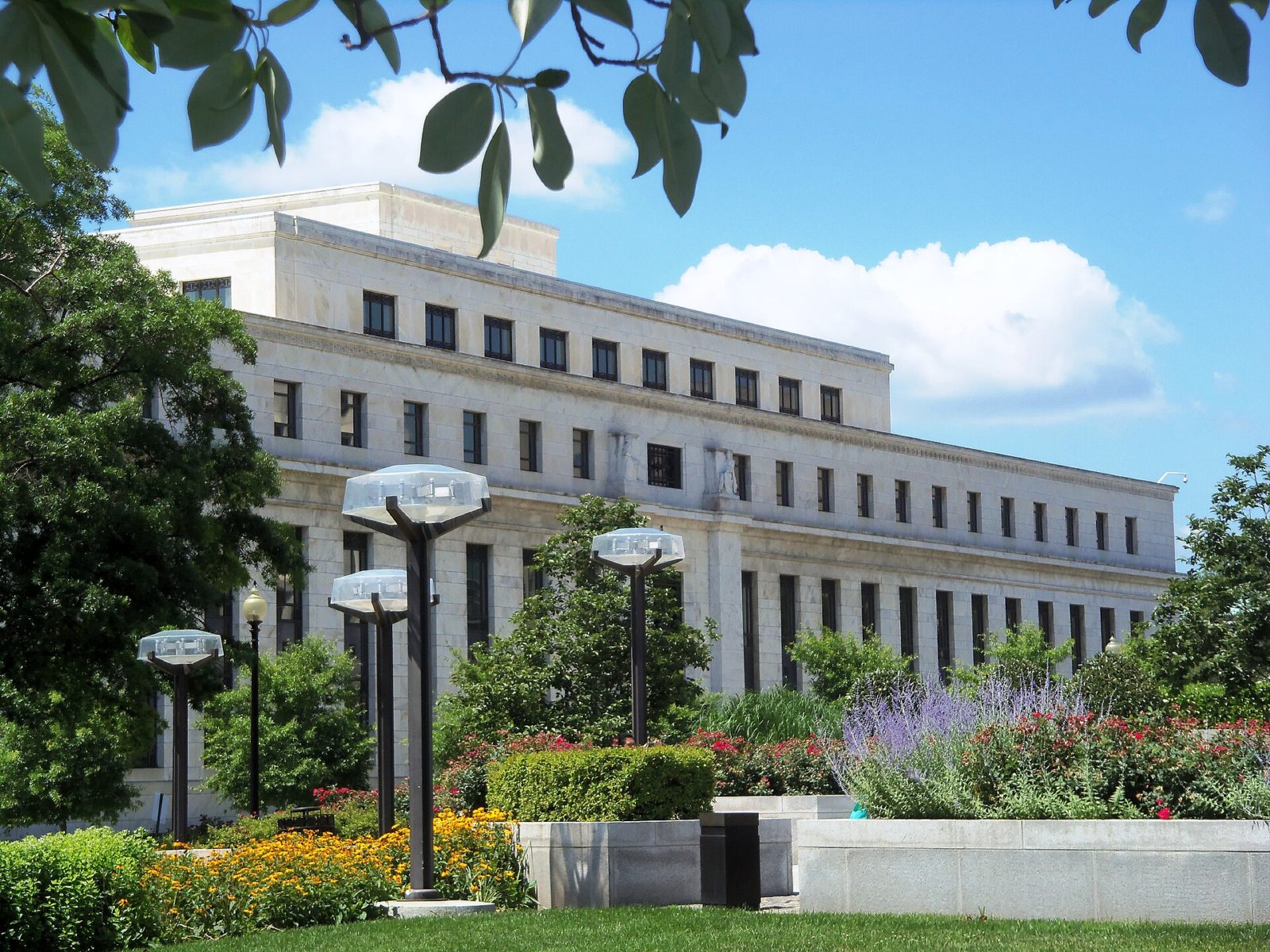
On October 28, 2026, the Federal Reserve's rate-setting committee kept the federal funds target range at 3.75% to 4%. The vote was 10 to 2. The two dissenters, Lisa D. Cook and Beth M. Hammack, wanted to raise the range by a quarter point.
The statement said "Inflation remains elevated" and that uncertainty "remains elevated owing, in part, to geopolitical developments." It also said the economy "is expanding at a strong pace" and that the unemployment rate "has changed little." The next meeting is December 8 to 9, and it comes with fresh economic projections.
A hold with two votes for a rise doesn't tell you what happens in December. It does mean a cut is not the only option on the table, so it's a sensible week to check what your own debts and savings are costing or earning.
Who's affected
- Credit card and HELOC borrowers. Most card APRs are variable, and many are set as the prime rate plus a margin. The Fed's own data put prime at 7.00% on November 5.
- Savers. Bank savings rates aren't set by the Fed, but they tend to follow it.
- Home buyers and people refinancing. Fixed mortgage rates follow longer-term bond yields more than the Fed's own rate. The 10-year Treasury yield was 4.84% on November 5.
A $5,000 card balance, worked out
The Fed's consumer credit report, published November 6, puts the average APR on credit card accounts that were charged interest at 22.36% in the third quarter of 2026. Across all accounts it was 21.19%.
- One month's interest on $5,000 at 22.36%: $5,000 x 22.36% / 12 = $93.17.
- If you made no payments for a year, monthly compounding would add $1,240.00.
- If the Fed raised rates by a quarter point and your card followed, the APR would be 22.61%. That's $94.21 a month, or $1.04 more.
So a Fed move changes this bill by about a dollar a month. Paying the balance down changes it by far more.
$10,000 in savings, worked out
The FDIC's national average savings rate was 0.38% on October 19, 2026. Over 12 months, $10,000 at 0.38% APY earns $38. At 3.50% APY, the rate Marcus by Goldman Sachs showed for its Online Savings Account on November 8, the same $10,000 earns $350. That's $312 more for moving the money. We compare more banks in our story on savings rates this week.
A $300,000 mortgage, worked out
Freddie Mac's weekly survey had the average 30-year fixed rate at 7.18% on November 5, down from 7.24% a week earlier but up from 6.22% a year ago. The 15-year average was 6.57%.
- $300,000 over 30 years at 7.18%: $2,032.30 a month in principal and interest.
- The same loan at last year's 6.22%: $1,841.30 a month.
- The difference: $191.00 a month, before taxes and insurance.
If you already have a fixed rate, nothing changes for you. Adjustable-rate mortgages and HELOCs reset with their index, so check your loan papers for the next reset date.
What to do now
- Find your card APR. It's on your statement. Multiply your balance by the APR and divide by 12 to see what a month of interest costs.
- Pay the highest APR first. Every dollar off a 22% card saves more than a dollar earns in almost any savings account.
- Move idle cash. If your savings pay close to the 0.38% average, compare online banks before the December meeting.
- Check any adjustable debt. Look up when your HELOC or ARM rate next resets and what index it follows.
- Hold off on guessing. Don't time a mortgage on what the Fed might do in December. Compare lender quotes on the same day instead.
Questions
Will my credit card rate change right away? Only if the prime rate moves. With the Fed on hold, prime stayed at 7.00%, so most variable card APRs haven't moved since October 28.
Is now a good time to lock a mortgage rate? Nobody knows where rates go next. The 30-year average has fallen three weeks in a row, Freddie Mac said, but it's still almost a point above last year.
When's the next decision? December 9, at the end of the December 8 to 9 meeting.
Does the Fed set my savings rate? No. Banks set their own, which is why the gap between the 0.38% average and online banks is so wide.
Ways to save
If you're building a holiday budget around these numbers, a paper planner helps some people stick to it. Franklin Planner has code CHEER for 10% off $60, 15% off $80 or 20% off $100, until December 25. Our holiday budget guide walks through setting a limit.
When you shop through Promo Magpie, part of the commission the shop pays us goes to the charity or club you pick. You pay the same price.
Sources: Federal Reserve FOMC statement, October 28, 2026, Federal Reserve implementation note, October 28, 2026, Federal Reserve FOMC calendar, checked November 8, 2026, Federal Reserve H.15 selected interest rates, November 6, 2026, Federal Reserve G.19 consumer credit, November 6, 2026, FDIC national rates, October 2026, Freddie Mac PMMS, November 5, 2026, Marcus Online Savings, checked November 8, 2026
More on your rights when you shop
- Fake reviews are banned, with fines up to $53,088 each: how to spot them before you buy
- SCRA rights: the 6% interest cap, ending a lease or phone contract, and foreclosure protection
- Restocking fees and return shipping fees: when stores can charge them, and when you can push back
- Surprise medical bill? How the No Surprises Act protects you, and how to dispute it
The Thursday email
Every Thursday: the best codes from the brands you shop at. After you sign up, pick your brands and whether you want codes, hot deals, free delivery or student offers. No spam, unsubscribe in one click.
Keep reading

Veterans: watch for pension poaching, paid "claim help" and benefit buyouts
Filing a VA claim is free, and nobody can guarantee you a benefit. Ahead of Veterans Day, here's how pension poaching, claim fee scams and benefit buyouts work, and where to get real help.
 Mike Dodd
After the midterms: fake donation texts, "recount" appeals and survey scams to ignore
The November 3 midterms are over, but the texts asking for money aren't. The FBI warned in October about fake PACs, fake fundraising and election phishing. Here's how to spot them and stop the messages.
Mike Dodd
Holiday spending 2026: the average household plans to spend $1,654. Here's how to set your own budget
Deloitte says the average household expects to spend $1,654 this holiday season, and the NRF forecasts sales passing $1 trillion. Here's what the forecasts say, and a simple plan for setting your own budget.
Mike Dodd