
Space heaters vs central heating: what each costs to run this winter
A 1,500-watt space heater costs about 27 cents an hour at average US electricity prices, while gas-heated homes are expected to spend $640 all winter. Here's when a heater saves money, and how to use one safely.

50% of our commission goes to .Change
Pick a charity and we'll give them 50% of our commission.
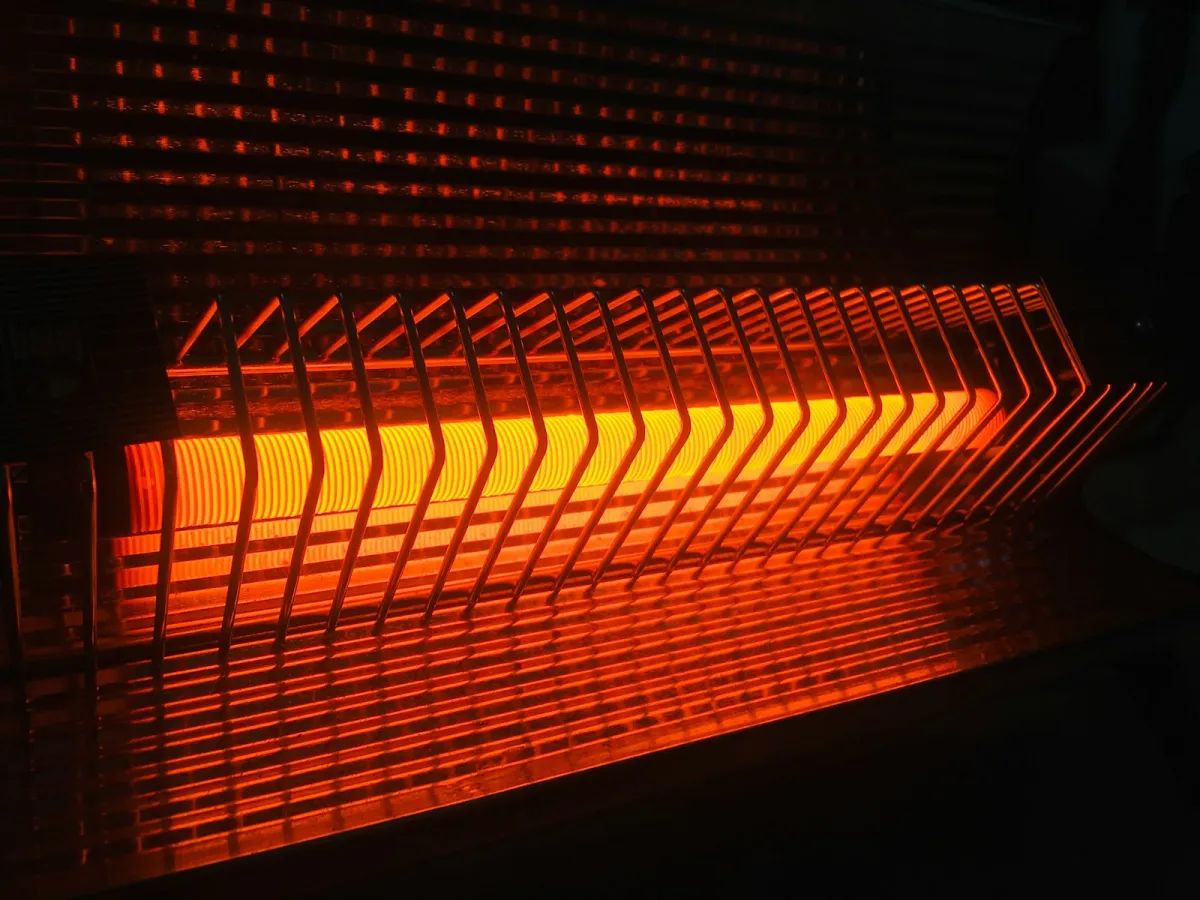
With the clocks going back on November 1 and the evenings drawing in, a lot of households are reaching for a space heater instead of turning up the thermostat. A space heater can cut your bill if it lets you keep the rest of the house cooler, but run one as well as your central heating and it adds to your bill.
We've worked out what a typical electric space heater costs to run per hour and per month, using the U.S. Energy Information Administration's (EIA) latest electricity prices, and compared that with what EIA expects households to spend on central heating this winter. Figures were checked on October 27, 2026. Your own rates will differ, so check your bill for your price per kilowatt-hour (kWh).
At a glance
- A 1,500-watt space heater costs about 27 cents an hour at EIA's forecast winter electricity price of 18.23 cents per kWh, or about $66 a month if you run it eight hours a day.
- On its low 750-watt setting, it's about 14 cents an hour, or about $33 a month.
- Where you live matters: the same heater costs about 71 cents an hour in Hawaii and about 19 cents in Louisiana, based on August 2026 prices.
- Central heating this winter: EIA expects homes heated mainly with natural gas to spend $640 from October to March, electricity $1,196, propane $1,246 and heating oil $2,115.
- Safety: portable heaters are linked to an average of 1,600 fires and 70 deaths a year, according to the Consumer Product Safety Commission (CPSC).
What a space heater costs to run
Most plug-in electric heaters top out at 1,500 watts, and many have a low setting of around 750 watts. Check the label on yours, because the cost depends directly on the wattage. A 1,500-watt heater uses 1.5kWh an hour on full power, so you multiply 1.5 by your price per kWh.
The table uses EIA's forecast average residential price for this winter (18.23 cents per kWh) and its August 2026 state averages, the latest month published. The monthly figures assume eight hours a day for 30 days.
| Electricity price | Per kWh | 1,500W per hour | 750W per hour | 1,500W per month | 750W per month |
|---|---|---|---|---|---|
| US winter forecast | 18.23¢ | 27.3¢ | 13.7¢ | $65.63 | $32.81 |
| Hawaii | 47.18¢ | 70.8¢ | 35.4¢ | $169.85 | $84.92 |
| Massachusetts | 30.48¢ | 45.7¢ | 22.9¢ | $109.73 | $54.86 |
| California | 29.75¢ | 44.6¢ | 22.3¢ | $107.10 | $53.55 |
| Connecticut | 24.51¢ | 36.8¢ | 18.4¢ | $88.24 | $44.12 |
| Washington | 14.63¢ | 21.9¢ | 11.0¢ | $52.67 | $26.33 |
| Idaho | 13.37¢ | 20.1¢ | 10.0¢ | $48.13 | $24.07 |
| Louisiana | 12.87¢ | 19.3¢ | 9.7¢ | $46.33 | $23.17 |
Most heaters have a thermostat and cycle on and off once the room is warm, so the real cost is often lower than running flat out. These are the maximum figures.
What central heating costs this winter
EIA's Winter Fuels Outlook, published on October 6, 2026, forecasts what the average household will spend on heating from October through March, depending on its main heating fuel.
| Main heating fuel | Share of homes | Winter spend | About per month | vs last winter | Expected price |
|---|---|---|---|---|---|
| Natural gas | About 45% | $640 | $107 | Down 9% | $13.44 per thousand cubic feet |
| Electricity | About 43% | $1,196 | $199 | Up 4% | 18.23¢ per kWh |
| Propane | About 5% | $1,246 | $208 | Down 3% | $2.52 per gallon |
| Heating oil | About 3% | $2,115 | $353 | Up 21% | $5.26 per gallon |
The shares are our calculation from EIA's household counts, and the monthly figures divide the six-month total by six, although real bills are higher in the coldest months. EIA's forecast assumes a winter close to last year's and the 10-year average, with the Northeast milder and the West colder. Heating oil is mostly used in the Northeast. EIA's weekly survey put residential heating oil at $6.19 a gallon and propane at $2.69 in the week of October 19, before taxes.
Why gas heat usually wins
An electric space heater turns almost all of its electricity into heat, but electricity is an expensive way to buy heat. At 18.23 cents per kWh, a therm's worth of heat from a resistance heater costs about $5.34. Natural gas at EIA's forecast $13.44 per thousand cubic feet works out at about $1.30 per therm, or about $1.36 per therm of heat if your furnace is 95% efficient (an assumption for illustration; older furnaces are less efficient). So heat from a space heater costs roughly four times as much as gas heat.
That's why a space heater only saves money when it replaces central heating rather than adding to it: heating the one room you're in while the thermostat for the rest of the house is turned down. Heat pumps change the picture for electric homes. The Department of Energy says modern air-source heat pumps can reduce electricity use by 50% compared with furnaces and baseboard heaters.
Using a space heater safely
CPSC says portable heaters, including electric space heaters, were involved in an average of 1,600 fires, 70 deaths and 150 injuries a year from 2020 to 2022. Its January 2026 winter safety advice says:
- Give it space. Keep heaters at least 3 feet from drapes, furniture, bedding and anything else that can burn.
- Plug it straight into the wall. Never use an extension cord or power strip.
- Turn it off when you go to sleep.
- Choose safety features. CPSC recommends a thermostat-controlled heater with an automatic shut-off if it tips over.
- Take care with fuel-burning heaters. Let them cool before refueling, and never refuel one while it's running. CPSC says unvented heaters that burn gas or other fuels carry the greatest carbon monoxide risk.
- Fit carbon monoxide alarms on every level of your home and outside sleeping areas, with battery or battery backup, and test them monthly.
CPSC also says to have fuel-burning heating systems, including furnaces, inspected by a professional every year.
How to keep heating costs down
- Find your real rate. Your bill shows your price per kWh and per therm, including delivery charges.
- Check the wattage. Use the low setting where it's enough, as it halves the hourly cost.
- Heat the room, not the house. If you use a space heater, turn the thermostat down for the rooms you're not using.
- Close doors and block drafts in the room you're heating, so the heat stays where you are.
- Get the furnace serviced before the coldest weather, which is also CPSC's safety advice.
FAQs
Do oil-filled radiators cost less to run than fan heaters?
Not per hour at the same wattage: a 1,500W oil-filled heater and a 1,500W fan heater both use 1.5kWh an hour on full power. Oil-filled heaters warm up more slowly and hold heat longer, which can mean they cycle off more once the room is warm.
Is it cheaper to leave the heating on low all day?
Generally not. A home loses heat faster the warmer it is inside, so keeping it warm when nobody's there uses more energy. A programmable thermostat lets you warm the house before you get up or get home.
Are space heaters safe to leave on overnight?
CPSC advises turning space heaters off when you go to sleep, even if they have safety features.
Sources: EIA: Electric Power Monthly, Table 5.6.A (August 2026), EIA: Winter Fuels Outlook 2026-27 (October 6, 2026), EIA: Heating Oil and Propane Update, EIA: natural gas prices, EIA: converting cubic feet to therms, Department of Energy: heat pumps, CPSC: Keep warm and safe this winter (January 2026), CPSC: winter safety (January 2025), CPSC: space heater safety checklist
The Thursday email
Every Thursday: the best codes from the brands you shop at. After you sign up, pick your brands and whether you want codes, hot deals, free delivery or student offers. No spam, unsubscribe in one click.
Keep reading

Delivery memberships compared: Instacart+, DashPass, Uber One, Walmart+ and Amazon
Most delivery memberships cost $9.99 a month, but the $0 delivery minimums run from $10 to $35 and service fees often still apply. We've compared fees, minimums, trials and the perks you may already have free.
 Mike Dodd

Phone plans compared: Visible, Cricket and other budget carriers vs Verizon and AT&T
Unlimited plans start at $25 a month on Verizon's and AT&T's own networks through budget carriers, against $45 for Verizon's cheapest single line. We've compared one line and a family of four.
Mike Dodd
Black Friday 2026 dates: when Walmart, Target, Lowe's and other big US stores start
Walmart's early deals start November 12, Target's November 5 and Lowe's October 29, while Amazon, Costco and Best Buy are yet to give full dates. Here's what each big store has confirmed so far.
Mike Dodd