







































Card debt at $1.285 trillion as banks trim credit limits: check yours before Black Friday
A Federal Reserve survey says banks tightened credit card limits and are less likely to approve subprime applicants. With card balances at $1.285 trillion and the next Fed decision on December 9, here's what a smaller limit does to your numbers.

50% of our commission goes to the charity or club you pick.Change
Pick a charity and we'll give them 50% of our commission.
What's happened
Americans owed $1.285 trillion on credit cards at the end of September, according to the New York Fed's household debt report, published November 10. That's $22 billion more than three months earlier and $52 billion more than a year before. Total household debt reached $19.105 trillion, and 5.0% of it was in some stage of delinquency, up 0.3 percentage points in a quarter.
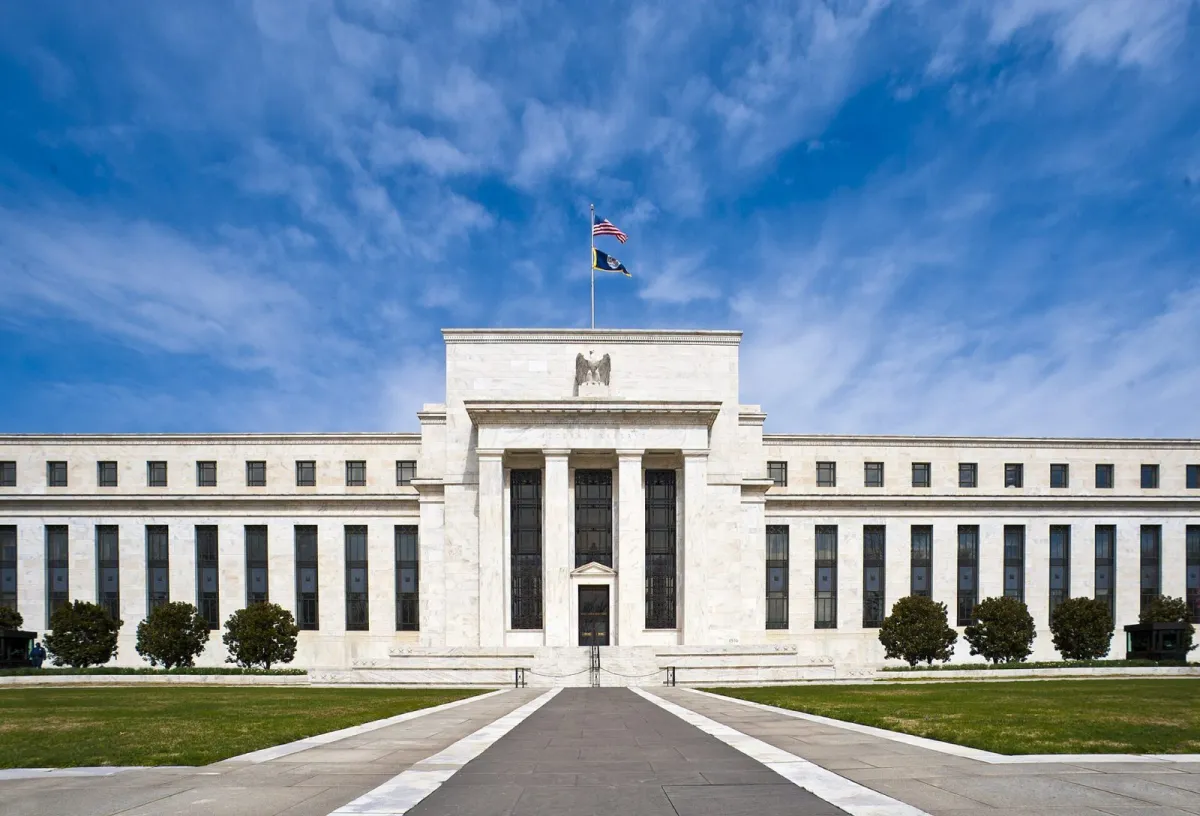
At the same time, banks are getting more careful about who gets credit and how much. The Federal Reserve's latest Senior Loan Officer Opinion Survey, posted on November 2, found that overall card lending standards were basically unchanged in the third quarter. But banks said they had tightened credit limits on credit card accounts and tightened lending to borrowers below their credit score cut-offs.
Over the past year, banks said they were more likely to approve card applications from prime and super-prime borrowers, and less likely to approve subprime applicants, a trend driven by small banks.
Who's affected
- Anyone planning to put Black Friday on a card. A lower limit leaves less room, and a balance that was comfortable in October can look large against a smaller limit.
- People applying for a new card or store card this week. If your credit score is below a bank's cut-off, the survey suggests approval is harder than a year ago.
What the Fed has decided, and when it decides next
On October 28, the Fed's rate committee kept the federal funds range at 3.75% to 4%, by 10 votes to 2. The two dissenters wanted a quarter-point rise. The next meeting is December 8 to 9, with the decision on December 9 and fresh economic projections. Most card APRs are variable, so any move would feed through to your rate within a billing cycle or two.
A worked example: what a lower limit does
Say you have a card with an $8,000 limit and a $2,400 balance. That's 30% of your limit, the most the Consumer Financial Protection Bureau (CFPB) suggests using to help keep a good credit score.
- Add $1,000 of Black Friday shopping: the balance is $3,400, or 42.5% of $8,000.
- If the bank cut the limit to $6,000, the same $3,400 would be 56.7% of your limit.
- To get back to 30% on a $6,000 limit, you'd need the balance down to $1,800, so you'd have to pay off $1,600.
- At 22.36%, the average APR banks charged on card accounts that paid interest in the third quarter, per the Fed's consumer credit data, a $3,400 balance costs about $63.35 in interest a month.
What to do now
- Check your limit today. Log in to your card app and note the limit and available credit before you shop, not at the register.
- Set a Black Friday cap below 30%. Work out 30% of your limit, subtract your current balance, and treat what's left as the most you'll put on that card.
- Read any letter or email about your limit. If an issuer lowers it, it generally must send an adverse action notice, which gives the reasons or tells you how to ask for them.
- Don't rely on going over. The CFPB says that after a limit cut, an issuer can't charge over-the-limit fees or a penalty rate for going over the new limit until 45 days after it notified you. After that, it can, if you've opted in to over-limit transactions.
- Pay before the statement closes. Paying part of the balance before the closing date lowers the balance that gets reported.
Questions
Can my bank lower my limit without asking? Yes. The CFPB says issuers can generally raise or lower credit limits, even to zero, which can leave you with no available credit until you pay the balance down.
Will a Fed rate rise on December 9 change my limit? Not directly. The Fed sets a short-term interest rate, not your limit. Your issuer decides your limit based on its own view of risk.
I was offered a low limit on a new card. Why? The CFPB lists poor credit history, high balances on other cards, low income, or a card that simply comes with small limits. You can check your credit reports free and ask the lender for more information.
Ways to save
If you're setting a cap for the holidays, writing it down helps. Franklin Planner has code THANKS for 15% off your order until November 26, and code CHEER for 10% off $60, 15% off $80 or 20% off $100 until December 25 (checked on November 23; not valid on e-gift cards or with other offers). Our holiday budget guide walks through setting a limit, and our story on store cards explains the deferred interest catch.
When you shop through Promo Magpie, part of the commission the shop pays us goes to the charity or club you pick. You pay the same price.
Sources: Federal Reserve Senior Loan Officer Opinion Survey, October 2026, New York Fed household debt and credit report, November 10, 2026, Federal Reserve FOMC statement, October 28, 2026, Federal Reserve FOMC calendar, checked November 22, 2026, Federal Reserve G.19 consumer credit, November 6, 2026, CFPB: can my issuer reduce my credit limit?, CFPB: why did I get a low credit limit?, Franklin Planner, checked November 23, 2026
More on your rights when you shop
- Charged more than the shelf price? 30 states now suing Dollar General, and your rights
- Store gone bankrupt? Use gift cards fast: deposit priority is capped at $3,800
- No heat in your rental? NYC requires 68°F by day, and some states pause winter shutoffs
- Holiday job? Over 40 hours a week means time and a half, but no federal holiday premium
The Thursday email
Every Thursday: the best codes from the brands you shop at. After you sign up, pick your brands and whether you want codes, hot deals, free delivery or student offers. No spam, unsubscribe in one click.
Keep reading
FTC refund checks: $9.8 million from Walmart case is real. The "FTC agent" calling isn't
The FTC is mailing 65,022 checks worth $9.8 million in the Walmart money transfer case and $4.4 million more to Publishers Clearing House customers. Here's how to tell a real refund from the impostors it warned about on November 12.
 Mike Dodd
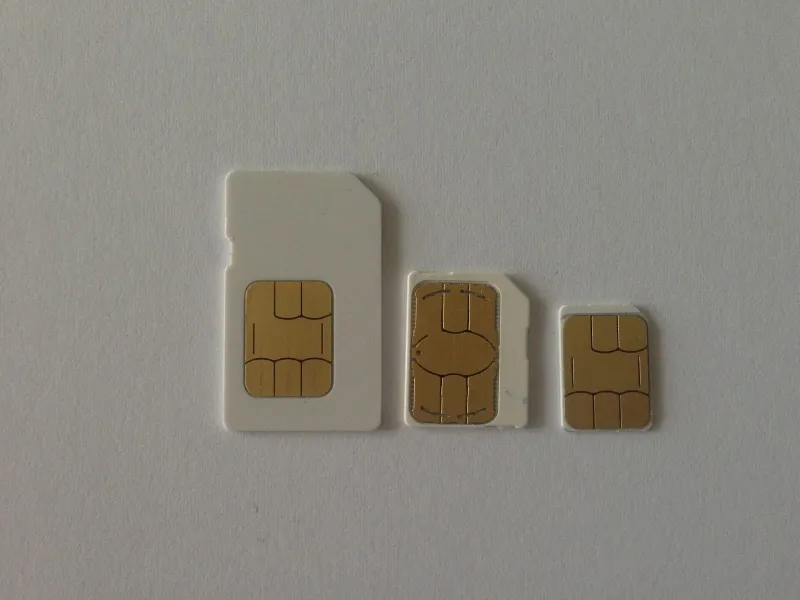
SIM swap scams cost $17.4 million in 2025: lock your phone number before the holidays
A SIM swap hands your phone number, and your bank's text codes, to a thief. The FBI logged 971 complaints and $17.4 million lost in 2025, about $17,885 each. The free carrier locks and app-based codes that stop it.
Mike Dodd
Fake airline help lines before Thanksgiving: fake support scams cost $2.1 billion in 2025
Scammers watch for travelers posting about delays and pay for search ads with fake airline numbers. The FBI logged $2.1 billion in fake support losses in 2025. Save the real number before you fly.
Mike Dodd